Not ready to replace your garage door, but tired of how it looks?
You are not alone. Plenty of homeowners we talk to are in exactly that spot. The door still fundamentally works, it just does not look great anymore.
If you read our recent post on garage door styles, you already know how big of an impact that door has on your home's curb appeal. It covers up to 30 to 40 percent of your home's visible exterior and it's one of the first things people notice when they pull into your driveway. According to Zonda's 2025 Cost vs. Value Report, garage door replacement returns an average of 268% at resale, which is the highest ROI of any home improvement project on the list. However, a full replacement is an investment, and sometimes the timing just is not right.
The good news is you do not always need a brand new door to make a meaningful improvement. With a few strategic upgrades, you can take a tired-looking garage door and make it look cleaner, more modern, and far more intentional. Here is where to start.
(In a hurry? Skip to the basic FAQ section at the end for fast answers to your DIY questions from an expert.)
Paint: The Highest Impact, Lowest Cost Upgrade
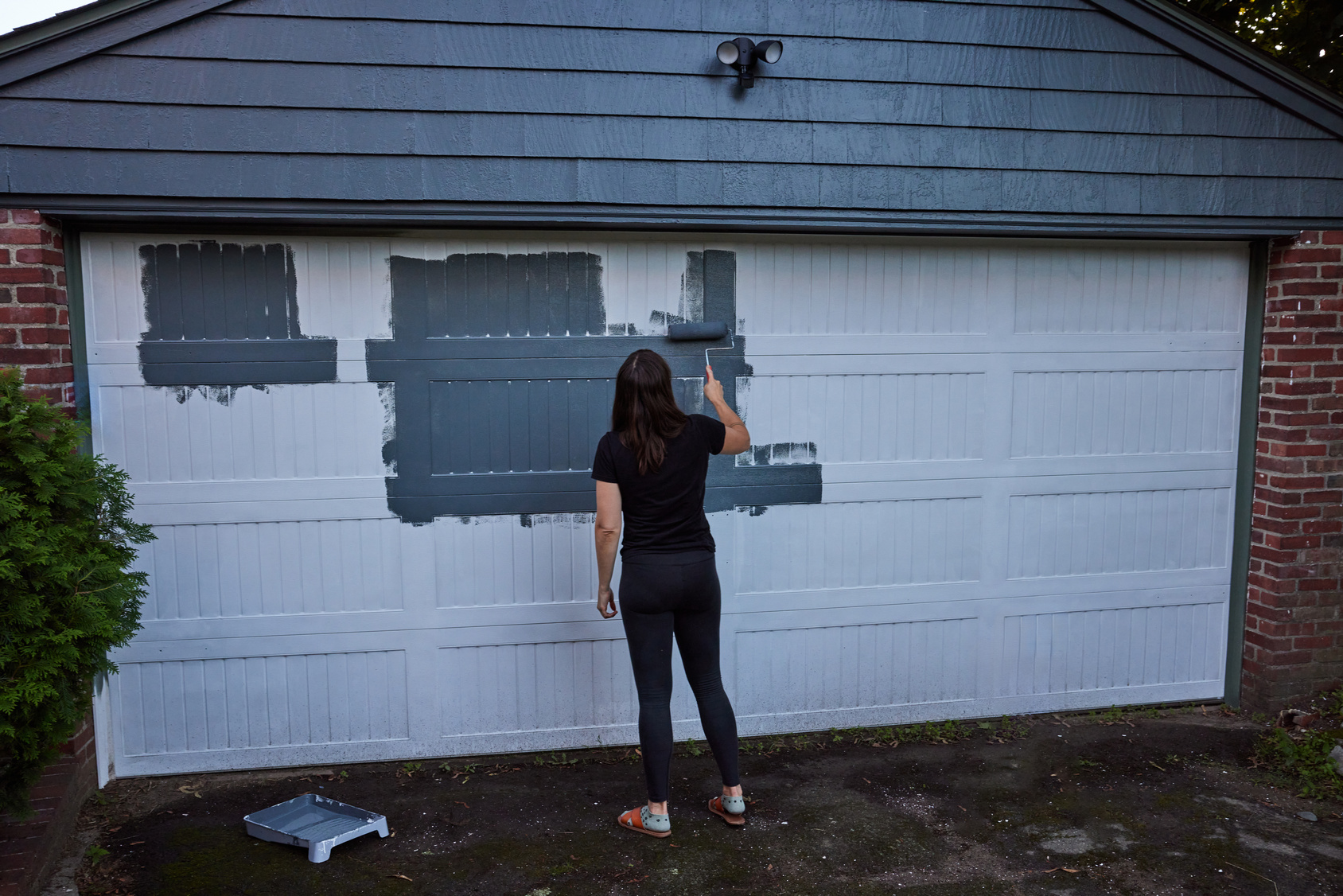
If there is one upgrade that delivers the most visual return for the least money, it is paint. A fresh coat in the right colour can take a dated door from eyesore to asset in a weekend. Done poorly, it can look worse than what you started with. Here are the basics on how to do it right.
Choosing the Right Colour
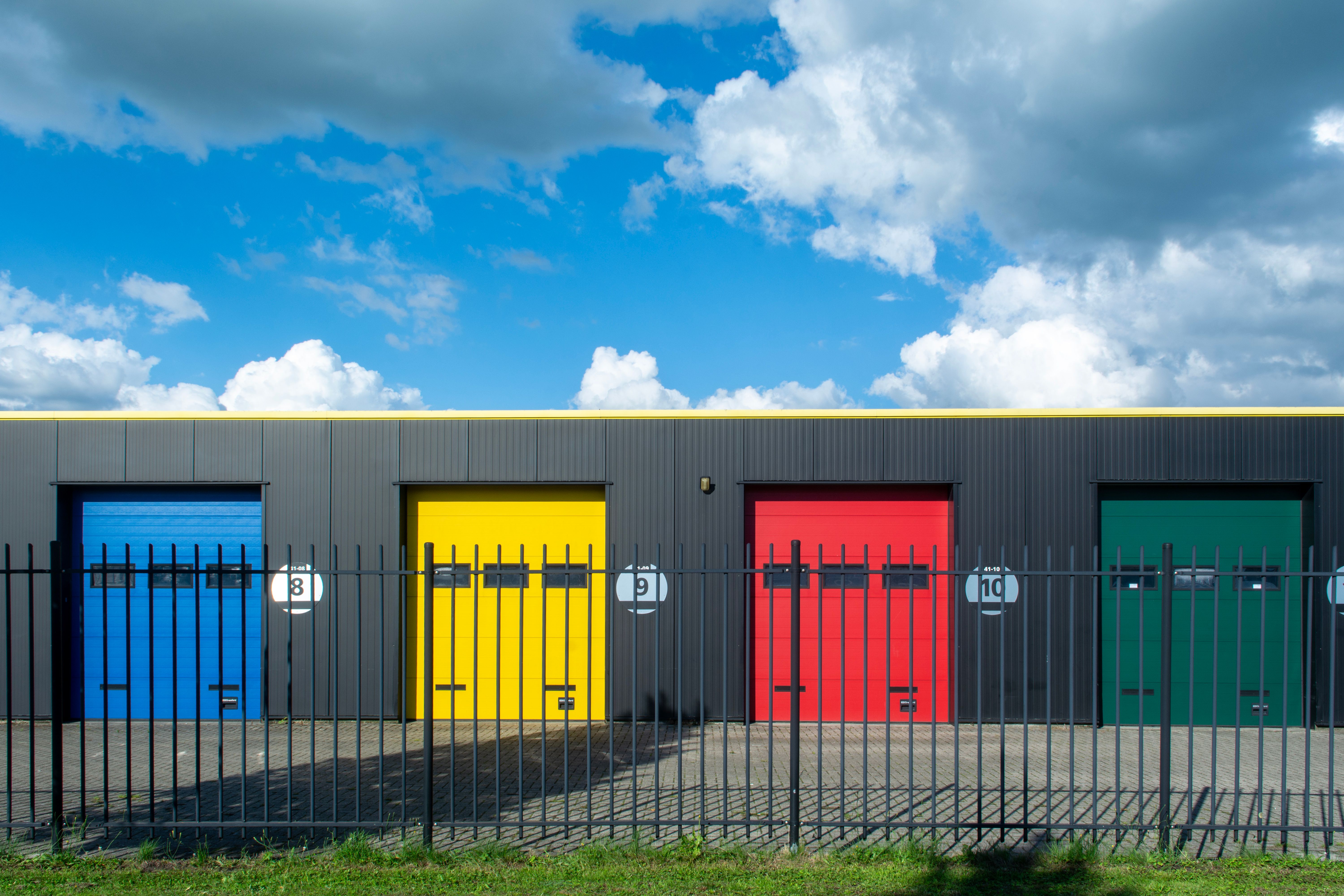
Your garage door should feel like part of the overall design, not a separate decision. A door that coordinates with the trim colour of your home creates visual continuity. A door that blends into the siding tends to disappear.
• Dark colours are having a strong moment right now. Charcoal, matte black, and deep navy add definition against lighter siding and read as intentional on both traditional and modern homes.
• For traditional homes, clean whites and warm neutrals hold up very well and pair easily with most trim colours.
• If you want the door to be less dominant, blending it closer to the siding colour can be a good approach, just make sure the finish is fresh and consistent.
How to Paint it Properly
• Clean the surface thoroughly using a pressure wash or TSP cleaner. Painting over a dirty surface just seals the problem in.
• Lightly sand any glossy or peeling areas. You do not need to strip the whole door, just knock back anything that is not adhering well.
• Spot prime any bare metal before the topcoat. Skipping this invites rust.
• Use exterior paint suited for your door material. On a steel door in our climate, a latex exterior in satin or semi-gloss holds up best against UV, freeze-thaw cycles, and temperature swings.
• Apply in thin, even coats. Use a sprayer if available, or a roller for flat sections and a brush for recessed edges. Two thin coats always look better than one heavy one.
• Avoid painting in extreme heat or direct sun. Aim for above 10 degrees Celsius and shade where possible for best adhesion.
• Do not paint weather stripping, tracks, or any moving parts.
Decorative Hardware: Fast, Affordable, and Surprisingly Effective
Decorative hardware is one of the most underused upgrades available to homeowners. A set of surface-mounted hinges and a pair of coach handles can give a plain raised panel door the visual language of a carriage house style without touching the mechanics of the door itself.
Most kits are installed with screws or heavy-duty adhesive and require no special tools. Black hardware adds strong contrast on lighter doors, while oil-rubbed bronze and brushed nickel work well where the rest of the home's exterior hardware leans warmer. The key is keeping it simple; prioritize symmetrical placement, consistent finish, and hardware that is proportional to the door. If you overdo it and the door starts to look busy. Keeping it intentional helps it look custom.
If you are painting and adding hardware at the same time, paint first. It makes the whole process cleaner.
Trim Kits and Overlays: Adding Visual Depth Without a Full Replacement
Trim kits and faux panel overlays have become a popular DIY upgrade for homeowners who want a more custom or carriage-style look without the cost of a new door. When done well, they can break up flat panels, add visual depth, and make a builder-grade door look like a deliberate design choice.
A few honest notes: keep the design simple and proportional to the door. Cheap materials may not hold up in a climate with serious UV exposure and freeze-thaw cycling. Vinyl wraps and adhesive wood-grain films have improved and can look great short-term, but they should be viewed as a cost-effective temporary solution rather than a permanent one. The lifespan is not along one on these products. Not all doors are good candidates for trim kits, so assess your door before ordering materials. Impacting features include damaged panels, panel material strength and shape, and the UV and wind exposure of your door.
Adding Windows to an Existing Door
Adding windows is one of the most impactful visual upgrades you can make to an existing door, but its feasibility depends on how your door was built.
Some steel door panels are manufactured with window inserts in mind. If yours was built this way, adding windows is a clean, relatively straightforward job. If your panels were not designed for cutouts, retrofitting windows is more involved and the results are less predictable. Cutting into a structural panel affects rigidity, and sealing it properly against our Canadian temperature swings takes careful work.
Our recommendation: have a professional assess the door before committing.
Dents and Panel Damage: What Can Actually Be Fixed
Minor dents in the flat face of a steel panel can often be improved using the same principles as automotive dent repair. The heat-and-pop method (applying heat with a heat gun to expand the metal, then rapidly cooling it with compressed air) can pull shallow dents out cleanly on thinner gauge steel. Auto body filler followed by sanding and repainting is another option for surface-level damage. Neither is invisible up close, but from the street on a freshly painted door, the results are often very acceptable.
Deeper creases and structural damage are a different story. Metal that has been folded or heavily struck is work-hardened and resists reshaping. In those cases, individual panel replacement is often the better path. Most residential doors are sectional, meaning damaged panels can be swapped independently. This is a significantly less expensive option than a full replacement if the rest of the door is in good shape. The catch is parts availability: door panel lines get discontinued, and matching a panel on a door more than 10 years old can be difficult. If it is available, you'll likely need to paint the whole door to get the colours to match. Give us a call and we can help identify your replacement options.
The Upgrades Most People Overlook
A lot of curb appeal projects focus only on the door itself and miss the details around it. Here are a few simple improvements that make the whole area feel finished:
• Weather seals and bottom seal replacement. A cracked bottom seal or perished weather stripping makes a door look neglected and lets in cold air and pests. Replacement seals are inexpensive and a straightforward DIY job on most doors.
• Exterior lighting. Updating the light fixture above or next to the garage door is low cost and high impact. It changes how the whole front of the house reads at dusk and in the evening.
• House numbers. Replacing small builder-grade numbers with larger, bolder ones is one of the easiest upgrades on this list and one of the most overlooked.
• Pressure washing the surrounding surfaces. Cleaning the driveway apron, the garage door surround, and the exterior trim does as much for curb appeal as any single upgrade. Start clean and everything else looks better.
Should Your Garage Door Match Your Front Door?
Not necissarily, but they should work together. Your garage door and your entry door are two major focal points on the front of the home. When they feel coordinated, the entire exterior looks more intentional.
That could mean matching colours, similar hardware finishes, complementary window styles, or simply choosing tones that sit comfortably in the same palette. They do not need to be identical, just cohesive. A home where every exterior detail feels considered reads very differently from one where each element was chosen independently.
When DIY Upgrades Are Enough - and When They Are Not
All of the above works well when the door is structurally sound and mechanically functional. DIY upgrades are a great fit if the damage is mostly cosmetic, the door performs reliably, and you are looking for a cleaner, more updated appearance.
They are not the right answer if the door is warped, heavily rusted, or showing serious wear in the springs and hardware. Cosmetic upgrades on a door with mechanical problems are short-term at best. At that point the conversation shifts to replacement.
If you are not sure which side of that line you are on, that is exactly the kind of question we can answer.
Quick Answers to Common Questions
These are the questions we hear most often on this topic.
Can I paint my garage door myself?
Yes. With proper prep and the right exterior paint, most homeowners can handle this and see a significant improvement. The prep work matters as much as the paint itself.
What is the best colour for a garage door?
Choose a colour that complements your trim or siding. Neutral tones are safe and versatile. Darker colours add contrast and tend to look sharp against lighter exteriors when done well.
Can you add windows to an existing garage door?
Sometimes. It depends on whether the door panels were designed to accept window inserts. Not all doors can be modified cleanly. Have a professional take a look before committing.
Can you replace just one garage door panel?
Yes, in many cases. It depends on parts availability and whether the panel can be matched to your existing door. Older doors can be harder to source for.
Are dented garage door panels worth repairing?
Minor dents can often be improved. Deeper creases and structural damage usually call for panel replacement rather than repair.
Should a garage door match the front door?
They do not need to match exactly, but they should feel coordinated. Consistent hardware finishes, complementary colours, and similar window styles all help the exterior feel intentional.
Not Sure Where Your Door Stands? We Are Happy to Help.
Whether you are refreshing what you have or starting to think seriously about a replacement, Align Doors & Maintenance is here for the conversation. We will take a look and give you a clear, honest recommendation on what makes sense for your door, your home, and your budget. Hit the button below to get started with your door upgrade today.
Precision You Can Trust. Excellence You Can See.

.png)
.jpg)