May is Opener Season.
This month of full of all sorts of season openers. Baseball is finding its legs, golf courses just thawed out, and every outdoor sport your kid is in is firing up practices and fundraisers like you’ve paid for a part time job. The farmers are finally getting into the fields after our 32nd winter (spring? Sprinter?). Hockey playoffs aren’t really an opener but they feel just as exciting as one…I digress.
Here at Align, we’re celebrating opener season by talking about: openers. The garage kind.
Later this month you’ll see a full checklist on what to do if your opener fails you, but for today we’re covering first things first:
Why garage door openers fail, and what practical steps you can take to prevent it.
Why Openers Fail: The Four Main Causes
Every motor requires maintenance and repair to stay operational; the motor mounted to your garage ceiling is no exception. There are predictable reasons that will lead to the failure of your opener, and there are certainly things you can watch out for to prevent yourself from being stuck in this situation on the worst possible day (because it’s always the worst possible day, isn’t it?).
1. Installation Mistakes
Problems can start before you even have the chance to use your garage door. We’ve seen a few in our time, but the most common include:
· Sensors misaligned or incorrectly installed. The safety sensors are the leading reason for a door not closing properly. Sensors that are misaligned or dealing with wiring faults from poor install will cause you grief or “ghosting”; the phantom opening of your door at 2am just to give your adrenals a workout.
· Springs or openers not matched to the door. Undersized openers or improper spring tension means that motor works harder than it should on every cycle.
· Travel limits or force settings not calibrated. The opener may stop early, reverse, or push too hard against the floor or stop bolt if these are off.
· Mounting and vibration issues. Poor mounting can cause vibration that loosens hardware and shifts alignment over time, creating noise, erratic travel, and sensor issues.
It’s important to work with a qualified installer who gets things right the first time, so you don't pay for it later. If you’ve purchased a property with an existing door system, book an inspection so you know what you are dealing with. You don’t want to be left out in the cold because the previous owner fancied themselves a DIY savant.
2. Lack of Maintenance
This is by far the most preventable cause and the most common one we see calls for. Most people do not think about maintaining their opener until it stops working. The catch is that the opener's lifespan depends heavily on door condition and upkeep. Here are basic maintenance steps that should be performed at least twice a year for getting the most out of your opener:
· Balance Test (1 min)
o Disconnect the opener with the emergency release
o Lift the door manually. It should move smoothly and stay supported by the springs about halfway. If the door falls or rises, it is out of balance. Time to call the pros.
· Safety Reversal Test (1 min)
o Place a scrap wood board (a one inch or 2 x 4 laid flat works great) under the door path. Close the door and confirm it reverses upon contact with the obstruction. There cannot be enough emphasis put on how important regularly testing the reversal is for protecting your people, your pets, and your equipment. Get in the habit of doing this test in regularly (monthly is ideal if we’re being honest)
· Sensor Wipe and Visual Check (1 min)
o If sensors are dirty or misaligned, the door may not close all the way. Check they are clean, unobstructed, and in alignment with each other. Grab that handy scrap wood board and check the door reverses when the sensor sight path is broken by an object. Most door manufacturers provide steps for identifying and solving minor sensor issues as an additional reference.
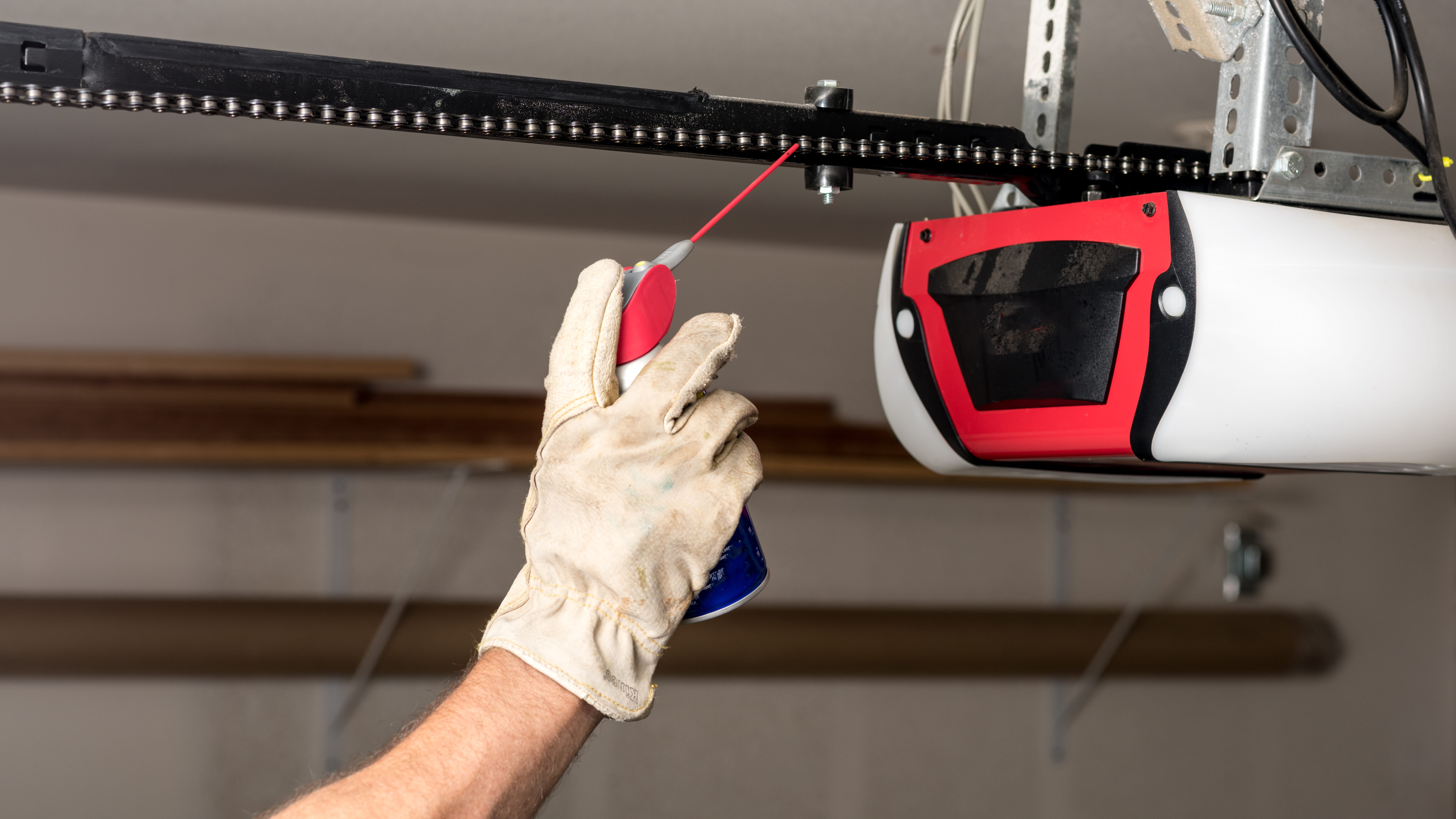
· Lubricant Application (20 min)
o Use a high-quality silicone-based or lithium grease spray. Avoid using standard WD-40.
o Wipe down tracks and hinges to remove dirt and old grease with a dry or damp cloth, use a degreaser if necessary for stubborn gunk.
o Spray hinges, roller stems/bearings, and torsion springs with lubricant
o Open and close the door a few times to distribute the lubricant
o Wipe away any excess to prevent dripping.
o Avoid lubricating the tracks themselves as this can cause slippage or attract dirt. Apply on a warm day for better adherence.
· Listen for Changes (Ongoing)
o Any new squealing, grinding, or jerky motion is a sign to book a service with your local professionals before something breaks.
Most of these steps are easily done as part of your home’s seasonal maintenance routine, but if you are unsure or short on time, call in a professional like Align for a basic inspection and maintenance call so you can rest assured your door is ready to work as hard as you do over the coming months.
3. Ignored Warning Signs
Openers rarely fail without advance notice. Slow or laboured movement, grinding or rattling sounds, intermittent operation, excessive vibration, or a door that reverses unexpectedly are all the system telling you something. The door that fails completely on a cold January morning usually gave three or four warnings in the weeks before. Catching those signs early is almost always cheaper and less disruptive than dealing with a full failure. When you’re in doubt, call in a professional inspection. The $100 you spend now could save you chaos and a much larger bill in the not-so-distant future.
4. Normal Wear and Tear
Every motor has a natural lifespan. Most residential openers are rated for 10,000 to 15,000 cycles (cycle = one open, one close). For a typical household using the door three or four times a day, that's roughly 10 to 15 years. For high-use applications like farm shops, commercial bays, or any door that opens and closes 8 to 10 times daily or more, that lifespan compresses significantly. The components that go first are usually the drive mechanism or the circuit board. If your opener is over 10 years old and starting to act up, have it assessed. There's a point where repair money is better spent on a new unit, especially with how much quieter, smarter, and more energy-efficient modern openers have become.
Book an Inspection or Talk Through a Replacement
If your door is acting up or you simply want to stay ahead of a breakdown, don’t hesitate to book a professional inspection. Here at Align Doors & Maintenance Ltd, we handle garage door opener repair, opener replacements, and the related garage door parts issues that often cause opener problems in the first place.
We will check:
· Door balance and travel
· Safety sensors and wiring
· Force and travel limits
· Wear on the drive system
· Overall safety and reliability
Based on what we find, we'll tell you honestly whether you need a repair, a tune-up, or a new unit so you can make the best decisions before disaster strikes. Our team of 12 trained technicians knows these systems inside and out, and we stand behind every job we do. Give us a call today at 403-952-6127 or click the button below to keep your opener on track. (See what I did there?)
Happy Opener Season,


.png)
.jpg)